Last updated November 21, 2026
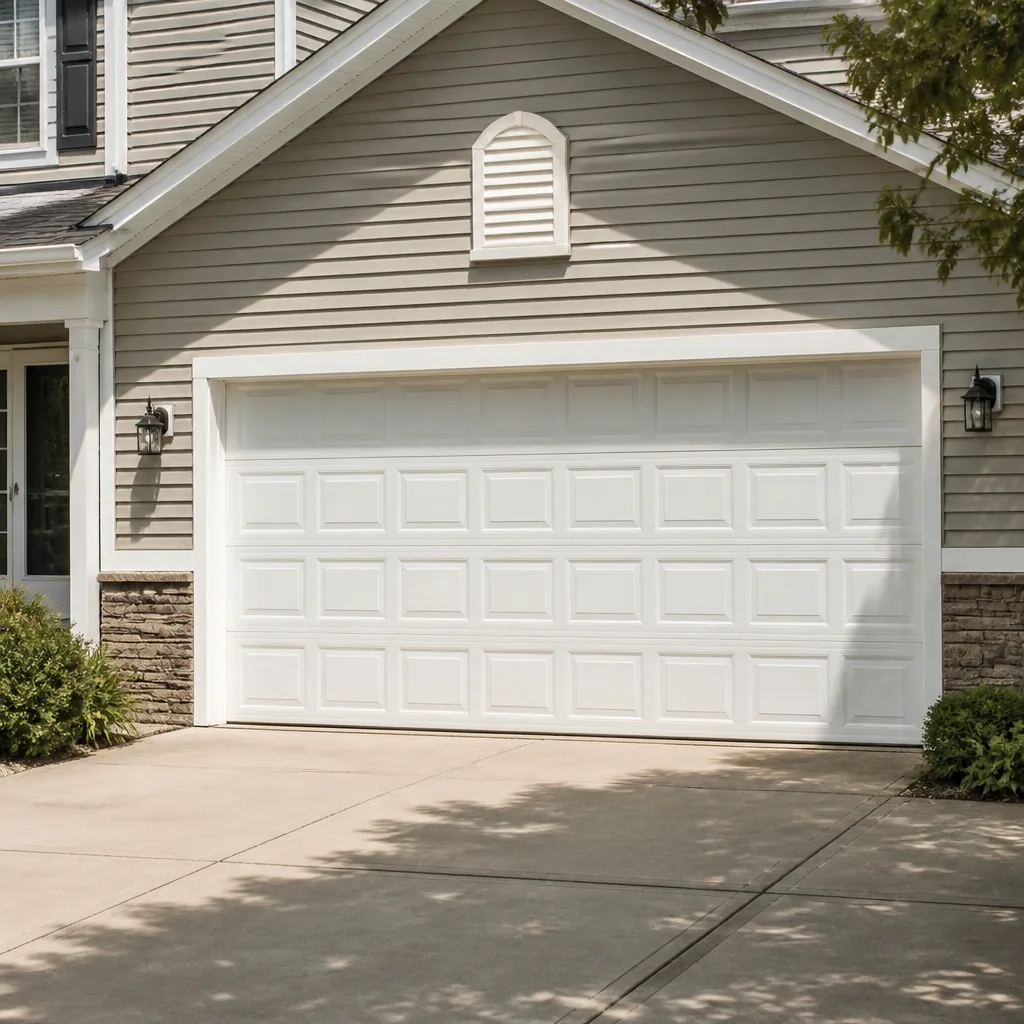 Raised-panel steel
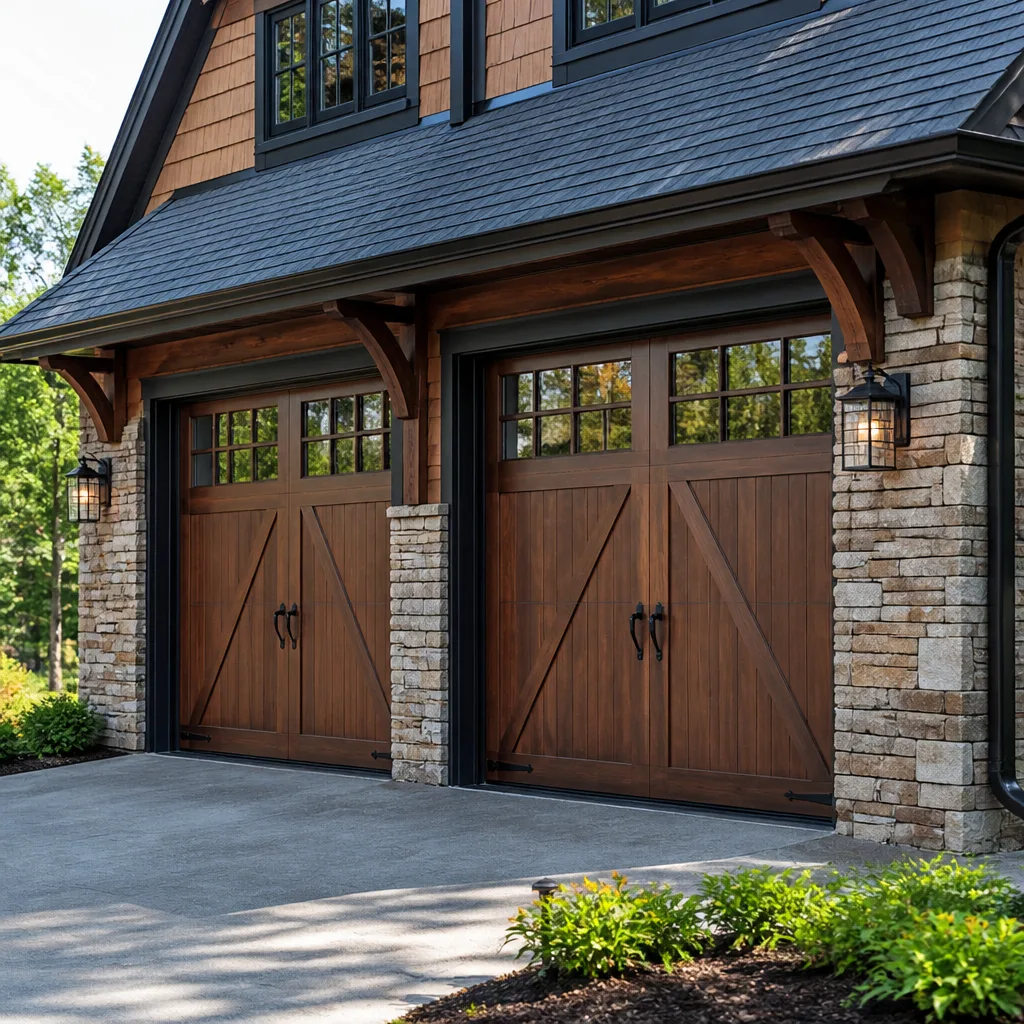 Carriage house
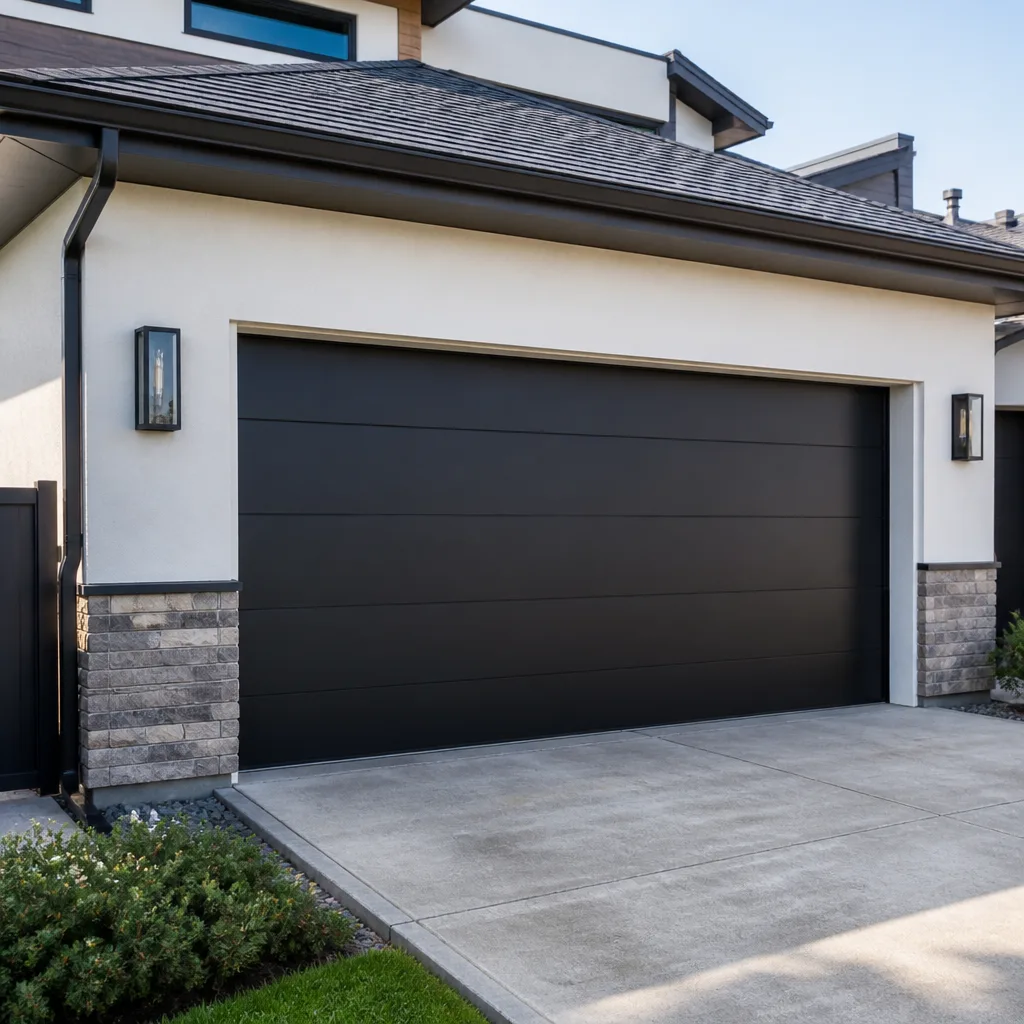 Modern flush
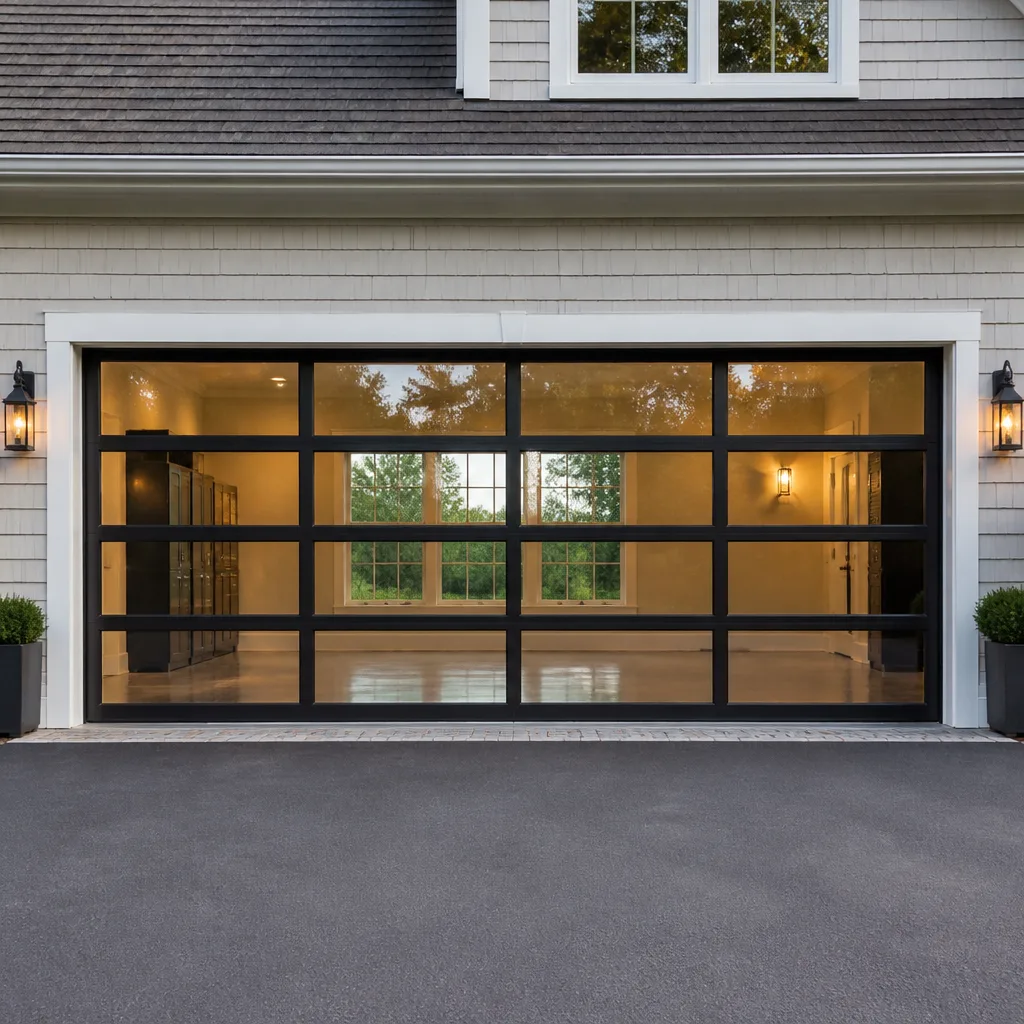 Full-view glass
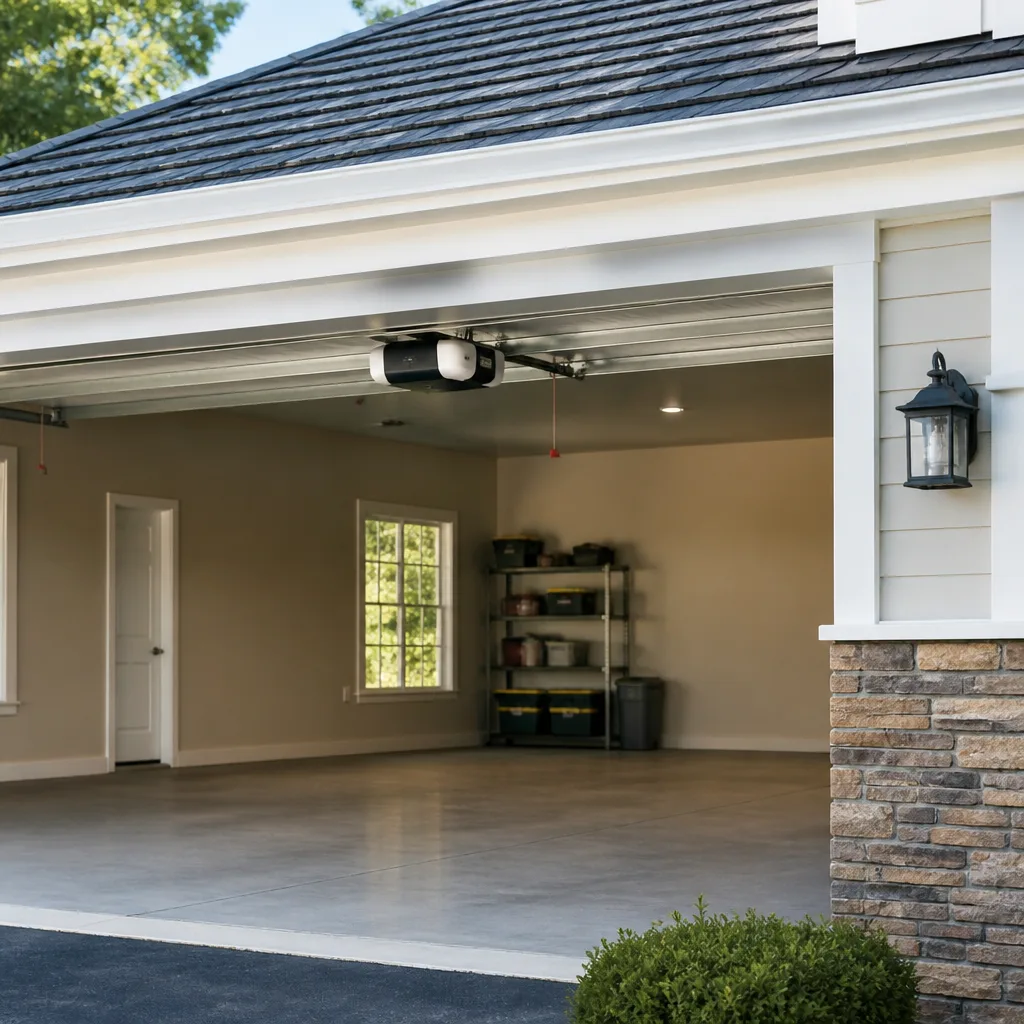 LiftMaster openers
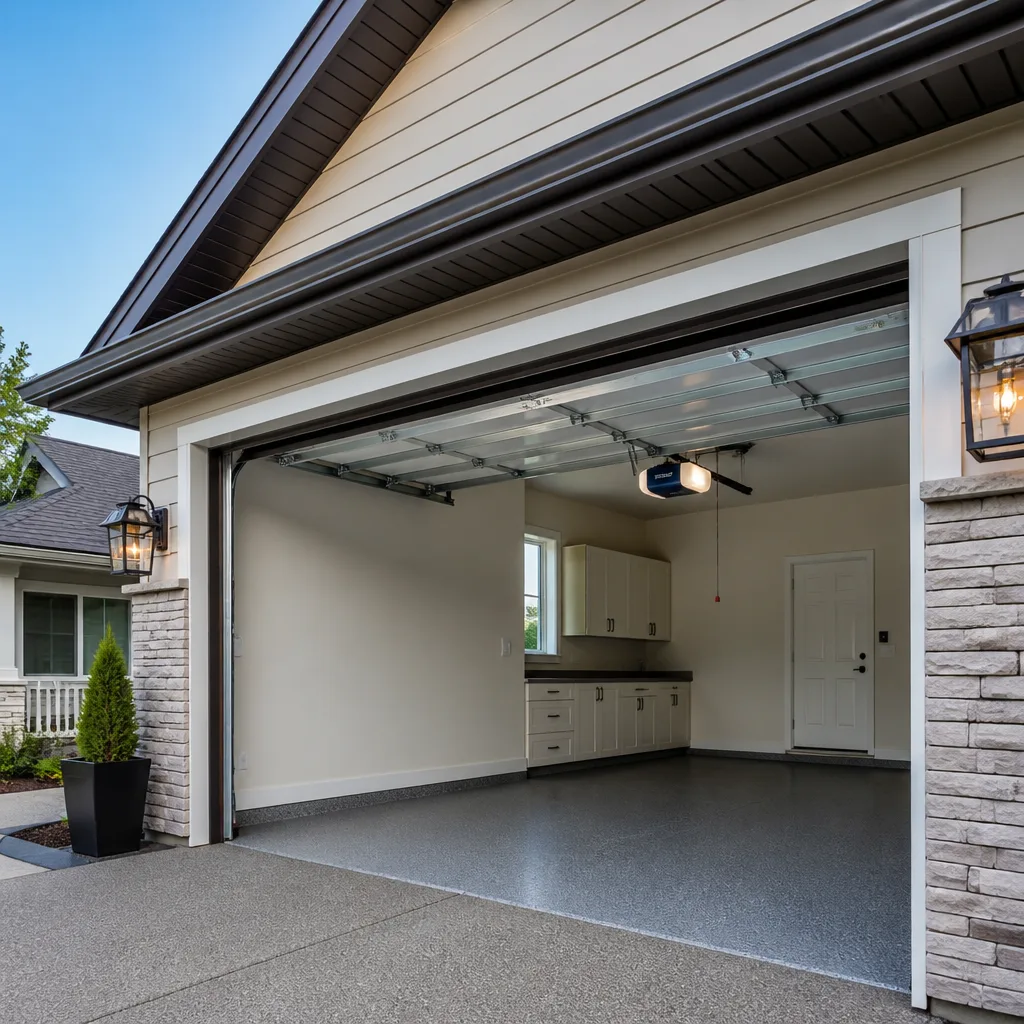 Chamberlain openers
Full 25-point door and opener safety check with every visit - springs, cables, rollers, tracks, and your LiftMaster or Chamberlain opener included
You get a price before we start. It does not change when the pro arrives.
Get your free estimateThe Complete Guide to Garage Doors in Fishers
Most garage door advice online is written for a country that doesn’t exist: a place with no freeze-thaw cycle, no builder-grade subdivision doors, and no HOA architectural review. Fishers isn’t that place. The majority of homes here went up between 2000 and 2020 under a handful of large developers, which means most garages in this city share the same three or four door and opener systems, and the same failure points show up again and again. Once you know what you already own, repair-or-replace decisions get a lot simpler. This guide covers the brands you’re likely to have, how Indiana weather treats them, HOA rules, insulation labels, and when to call in a specialist.
Quick Answer
Garage door work in Fishers comes down to three paths: repair what you have, replace the mechanical parts (springs, cables, opener), or install a new door. Most existing doors in Fishers are builder-grade steel raised-panel or carriage-style units paired with a LiftMaster or Chamberlain opener, and the first things to wear out are torsion springs, bottom seals, and weatherstripping. Fix those on schedule and a steel door can last far longer than the ten to fifteen years many homeowners assume. When the door is damaged beyond economical repair, or you want real insulation, replacement makes more sense. Either way, the written estimate is the price, and we quote before any work starts.
Styles & brands we work with
- Raised-panel steel
- Carriage house
- Modern flush
- Full-view glass
- LiftMaster openers
- Chamberlain openers
Table of Contents
- What’s Actually on Most Fishers Garages
- Door and Opener Brands You’ll Find in Fishers Subdivisions
- How Indiana’s Freeze-Thaw Cycle Wears Out Your Door
- Cosmetic Upgrade vs. Mechanical Overhaul
- HOA Rules That Affect Your Door Choice in Fishers
- How to Read Your Door’s Rating Label
- Why Spring Repair Is Specialist Work
- When a Broken Door Becomes Urgent
What’s Actually on Most Fishers Garages
Walk through a Fishers subdivision and you’ll see a pattern. The builders who put up most of the housing between 2000 and 2020 worked with a short list of suppliers, so the doors tend to fall into a few recognizable groups. Knowing which one is on your house tells you what to expect and roughly when.
The most common setup is a non-insulated or lightly insulated steel raised-panel door, 16 feet wide for a double bay or 8 to 9 feet for a single. Many of the newer builds inside neighborhoods like Saxony and Fishers Pointe went with a carriage-style steel door stamped to look like wood, because it satisfies architectural standards without maintenance. You’ll also find genuine wood doors on some of the older custom homes near the White River, and those need far more attention in this climate.
Here’s a rough sense of lifespan by type, assuming normal use and basic maintenance:
- Builder-grade steel raised-panel door: typically ten to fifteen years before panels, hinges, or the bottom section need serious work, though springs wear out sooner.
- Carriage-style steel door: similar panels and hardware, but the decorative overlays and faux finishes can degrade faster with sun exposure.
- Wood door: beautiful, but in Indiana’s humidity swings it needs regular sealing and repainting or the wood swells and splits.
- Insulated steel or aluminum door: the longest service life of the common options and the one that holds up best to temperature swings.
On the opener side, the majority of these homes were fitted with a LiftMaster or Chamberlain belt-drive or chain-drive unit, both brands from the same family and both very common in this market. That matters because a technician who knows those systems can usually diagnose a problem fast instead of starting from scratch.
Door and Opener Brands You’ll Find in Fishers Subdivisions
We work on the brand already in your garage, which is why it’s worth naming the names. Across Fishers you’ll run into LiftMaster and Chamberlain openers more than any other, with Genie units in some of the earlier builds and in homes where the opener was replaced. On the door side, Clopay and Amarr steel doors are the ones we see most in the 2000-to-2020 construction, and both are solid products when the hardware is maintained.
This brand familiarity isn’t trivia. Each manufacturer uses its own logic board layout, its own safety-reverse sensor design, and its own spring configuration. When a technician arrives already knowing how a LiftMaster trolley releases or how a Clopay bottom section fastens, the repair is faster and less likely to involve guesswork.
Some practical points about these systems in a Fishers home:
- Belt-drive LiftMaster and Chamberlain openers are quiet and common on homes with a bedroom above the garage; chain-drive units are louder but simpler.
- Genie units from the early 2000s sometimes have obsolete parts, which is a good reason to get an honest repair-or-replace opinion rather than forcing a fix.
- Clopay and Amarr steel panels are widely available, so replacing a single damaged section is often realistic instead of a whole new door.
If your opener is finally giving up, our garage door opener repair service starts with a straight diagnosis of what’s actually failing rather than a default push toward replacement. If the opener is fine and the door is the problem, garage door repair handles the panels, tracks, cables, and hardware.
How Indiana’s Freeze-Thaw Cycle Wears Out Your Door
Indiana’s freeze-thaw cycle is the single biggest environmental stress on a garage door here, and it does more damage than the national averages most guides assume. Through winter, the bottom of the door sits at the boundary between a heated interior and cold outdoor air, and moisture from snowmelt gets pulled under the seal and freezes overnight. That repeated freeze-and-thaw works like a slow pry bar against the seal and the bottom section.
Three parts take the brunt:
- Bottom seals. The rubber or vinyl astragal seal compresses and cracks, and once it’s stiff, cold air and water get in. This is the first thing to check every fall.
- Torsion springs. Steel loses some of its tension and fatigue resistance after thousands of cycles, and cold concentrates stress. Springs that feel fine in summer can snap on the first hard freeze. This is normal, predictable wear, not a defect.
- Weatherstripping. The jamb seal around the door frame hardens and pulls away, opening gaps along the sides and top.
Fishers winters swing hard between thaw and deep freeze, so a door that seals perfectly in October can be leaking by January. The practical move is to replace a stiff bottom seal and worn weatherstripping before the cold settles in, and to treat any spring that’s reached its cycle life as a scheduled replacement rather than a surprise. A spring that has visibly stretched, has gaps in its coils, or has already been paired with a fresh door is a candidate.
If you want a seasonal checklist that fits this climate, our guide to Fishers Garage Door Repair Pros walks through the whole service lineup and what each covers.
Cosmetic Upgrade vs. Mechanical Overhaul
This is where a lot of homeowners waste money in one direction or the other. A cosmetic upgrade changes how the door looks and how well it seals; a mechanical overhaul fixes how it moves. They solve different problems, and one doesn’t substitute for the other. Knowing which you actually need is worth more than any single product recommendation.
A cosmetic upgrade makes sense when the door is structurally sound but looks dated or seal-poor. Common examples:
- The panels are intact but the finish is faded or the color no longer suits the house.
- The door seals poorly because the seal and weatherstripping are old, not because the door is damaged.
- You want carriage-style looks or windows and the existing door can’t be modified.
A mechanical overhaul makes sense when the door is unsafe or unreliable, even if it looks fine:
- The door is out of balance, will not stay open partway, or slams shut.
- Springs or cables are worn, snapped, or visibly stretched.
- The opener strains or the door binds in the tracks even after the hardware is adjusted.
The mistake is spending on a new finish, window inserts, or a fresh paint job while the springs are past their life or the cables are frayed. The good news is that if you genuinely need both, you don’t have to call two companies: garage door work here is repair, opener repair, springs, installation, and emergency calls under one specialist roof. When the answer is a full replacement, our garage door installation service handles the measure, the order, and the fit, and the price is quoted before anyone touches the door.
HOA Rules That Affect Your Door Choice in Fishers
Many Fishers subdivisions have architectural standards, and the garage door is one of the most visible things a homeowner can change. Before you buy anything, ask your HOA or architectural review committee what’s allowed, because color, material, and window placement are the three most commonly restricted items, and they’re exactly the choices you’d otherwise make first.
What tends to come up in Fishers communities:
- Color. Many HOAs keep a palette that matches the subdivision, so a bright new finish can be rejected even if it’s a better product.
- Material. Carriage-style steel and traditional raised-panel steel are usually safe; wood doors and unusual finishes sometimes need approval.
- Window placement. Windows high in the top section vs. a full row across the middle can be restricted, since it changes the look of the whole street.
The smoothest path is to get the approval before the purchase, not after. We ask for the approved style and color when a replacement is scheduled so nothing gets ordered that the committee would reject. If you’re not sure what your community allows, ask the committee directly; we won’t guess at rules that live with your HOA.
How to Read Your Door’s Rating Label
Before you buy a replacement for insulation, look at what your current door already offers. There’s a label fixed to the door or its packaging that tells you the insulation value, and many Fishers homeowners are surprised to find their builder-grade door is less insulated than they assumed.
What the label means in practical terms:
- Look for the R-value or stated thermal rating. It’s usually on a sticker on the door’s interior or in the manufacturer’s literature. Higher means better resistance to heat transfer.
- Check whether the door is a single-layer, double-layer, or sandwich construction. A sandwich door with a core insulates far better than a single steel skin, and the label should tell you which you have.
- Match it to your garage use. If the garage is only for cars, modest insulation is fine. If there’s a bedroom above it or you use it as a workshop, insulation matters more for comfort and for the rooms above.
If the label is missing or unreadable, measure instead: a builder-grade steel door with no core is likely a light single-layer unit, while a solid-feeling door is probably insulated. Understanding this before you shop means you won’t pay more for “insulation” and end up with the same rating you already had. A quick call to us with the label details gets you a plain answer about what the number means for your home.
Why Spring Repair Is Specialist Work
Garage door springs hold enough stored tension to cause serious injury, and this is the one part of the system we firmly tell homeowners not to touch. Technicians who work on high-tension torsion and extension springs are trained for exactly this, and our spring service is a named service rather than an afterthought for that reason. Many generalist handymen decline spring work or handle it improperly, and a spring that fails during a DIY attempt or a loose repair can send a door crashing down.
Here’s what a trained tech does, described so you know what’s happening, not so you can try it:
- Confirm the spring type and condition. Torsion springs are usually on a shaft above the door; extension springs run along the sides. Each has its own wear pattern.
- Release the door’s tension safely using the proper winding bars and the correct turns for the spring’s size. Getting the turns wrong puts dangerous load on the hardware.
- Replace with correctly rated springs. A spring that’s undersized for the door wears out fast and can stress the opener. A matched pair is usually replaced together so both sides carry equal load.
- Rebalance the door and test safety features. The door should hold partway and reverse on contact before it’s put back into service.
The range you’ll hear is that a single spring replacement is typically quoted and agreed before work starts, and a matched pair costs about twice that. Pairs are usually the right call when both springs are the same age.
When a Broken Door Becomes Urgent
A broken door is sometimes just inconvenient and sometimes urgent, and the difference is whether your home is left unsecured or your vehicle is trapped. When the door won’t close, you’re looking at an open garage and an unsecured house. When it won’t open, the car is locked in. Those are the situations we treat as urgent, and emergency garage door service is a core part of what we do, not an add-on.
Signs your repair shouldn’t wait for a scheduled visit:
- The door is stuck open and can’t be secured.
- The door is stuck closed and a vehicle is trapped inside.
- A spring or cable has snapped and the door is hanging at an angle.
- The door came off its track or is dragging on one side.
- The opener runs but nothing moves, or you smell burning from the motor unit.
If any of those are happening, stay clear of the door and the springs. Don’t try to force it open or closed by hand: a door with a failed spring is extremely heavy and can drop. Call us instead. Our technicians have up to 9 years of experience and know these systems, so the first visit is about diagnosing and making the door safe, and the price is quoted before the repair work begins. For spring or opener emergencies the timing is the thing; for a full replacement we’ll measure, order, and schedule so you know when the new door is coming.
Common Mistakes to Avoid
- Treating a snap as bad luck. Springs fail on a predictable cycle, so a failed spring usually means the door is due rather than that something “went wrong.” Check the springs at the end of every summer and replace on schedule.
- Skipping the post-winter seal check. Indiana’s freeze-thaw hardens bottom seals and weatherstripping fast. A stiff, cracked seal lets in water and cold all year, and it’s one of the cheapest fixes on the door.
- Buying insulation by feel instead of the label. Read the R-value on your current door before you shop, or you can pay for a “new” insulated door with no better rating than what you already had.
- Changing the door color before checking the HOA. Many Fishers communities have approved color and window-placement rules. Buy after approval, not before, or you may own a door the committee won’t let you install.
- Letting a handyman attempt spring or cable work. A generalist who doesn’t specialize in high-tension springs is a genuine safety risk to themselves and to your door, and a loose repair can be worse than the original breakdown.
- Forcing a jammed door. If the door is off its track or a spring has failed, pushing it by hand can bend the panels and turn a repairable door into a replacement.
- Assuming you need a new door when you need repair, or the reverse. A worn finish on sound hardware needs cosmetic work; a slamming door with old springs needs a mechanical overhaul. Match the fix to the real problem.
See the difference
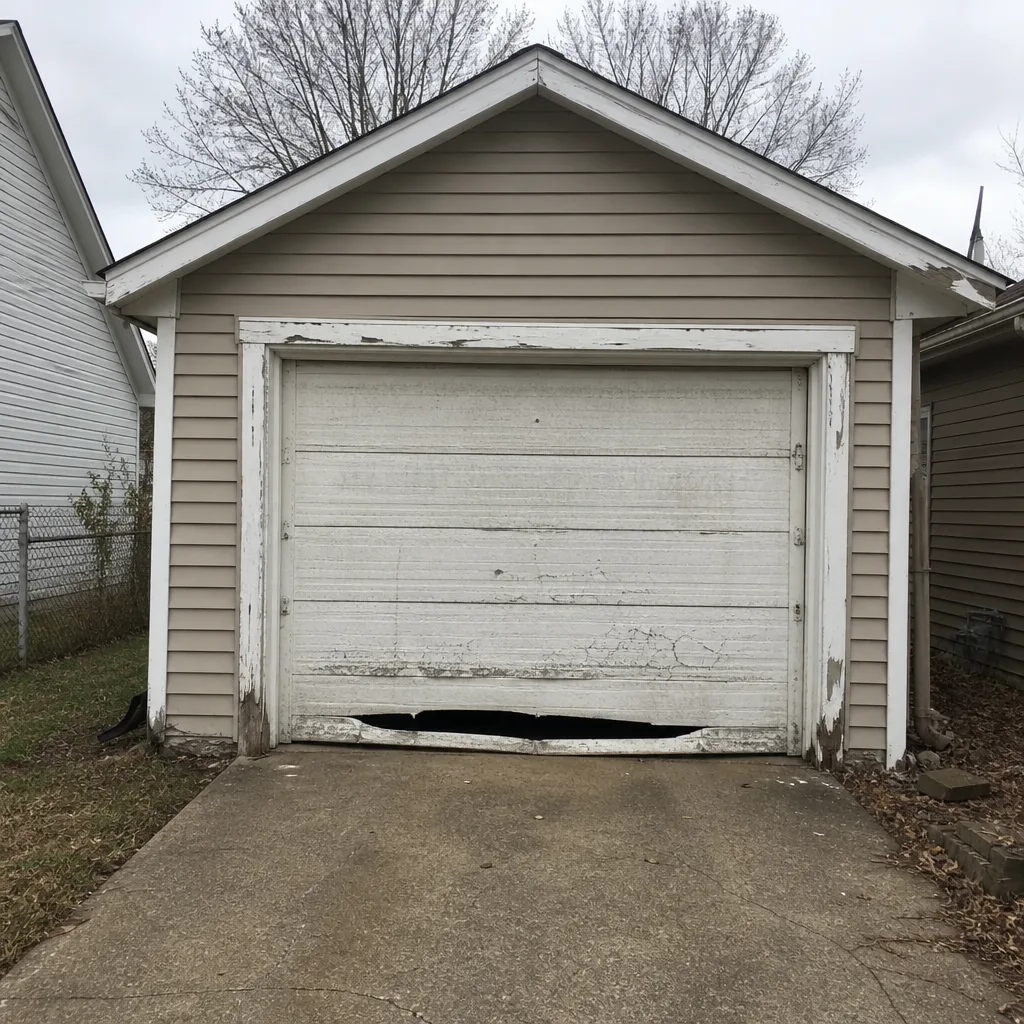 Before
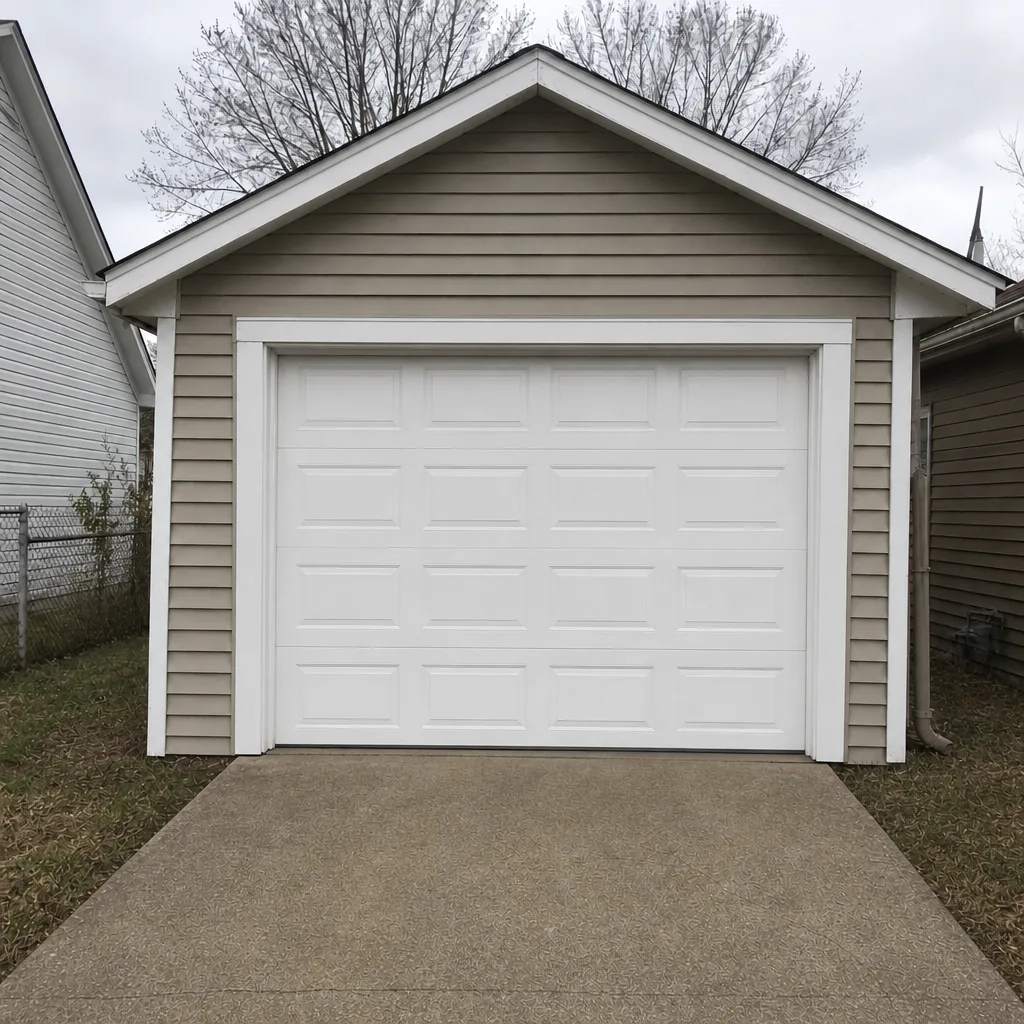 After
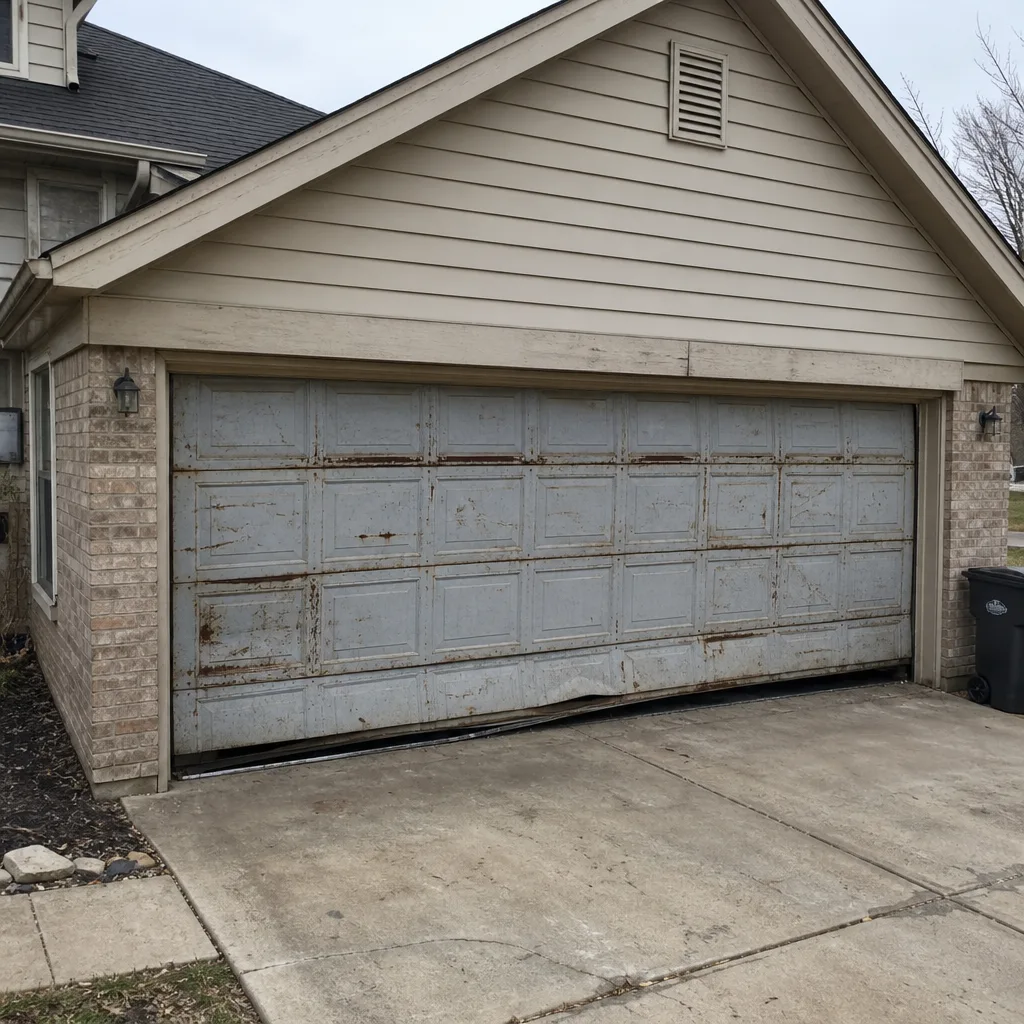 Before
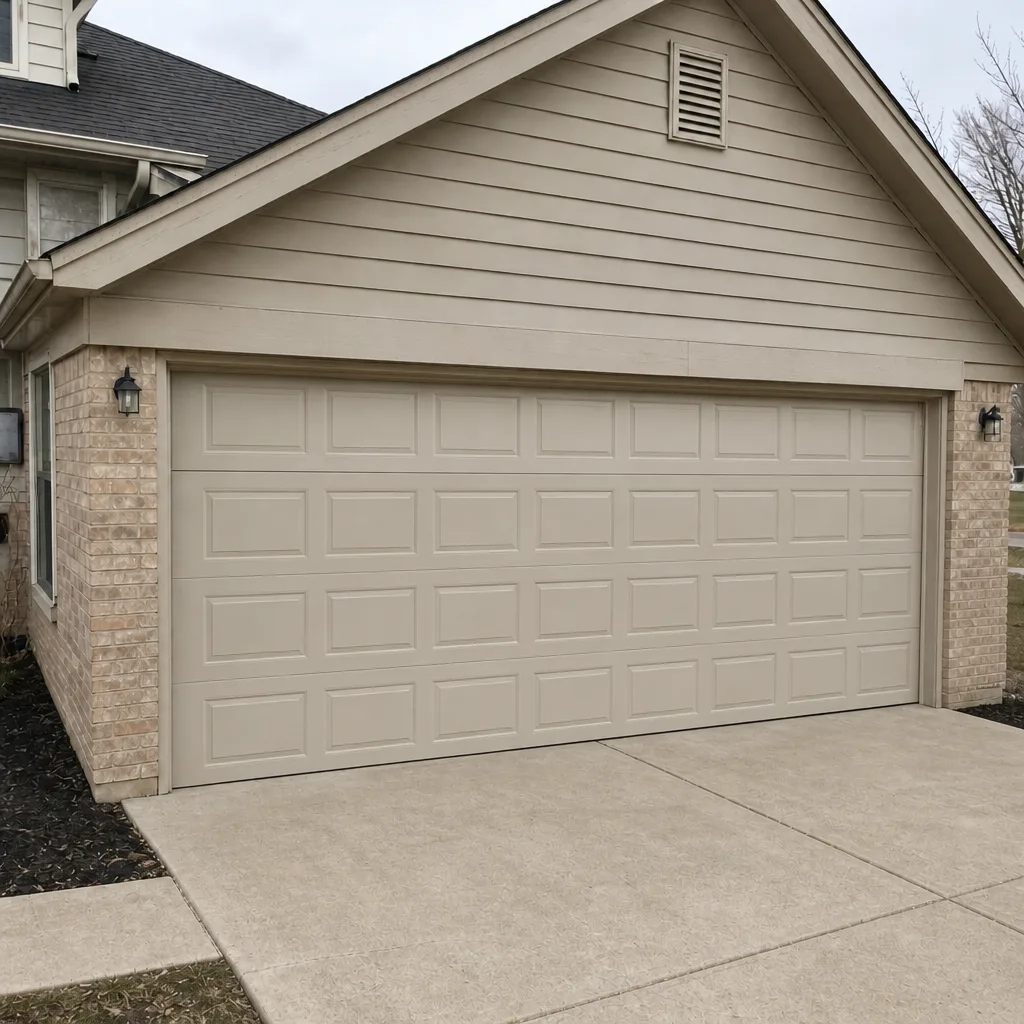 After
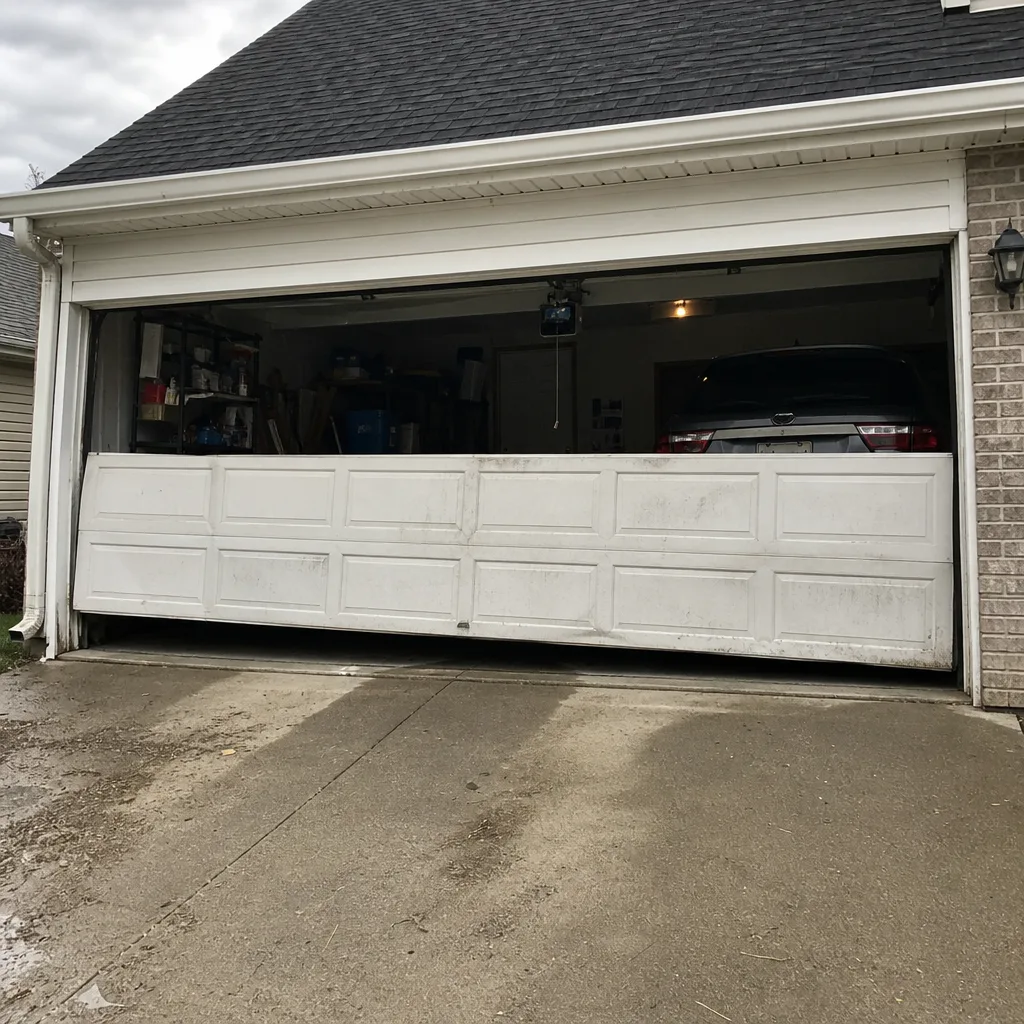 Before
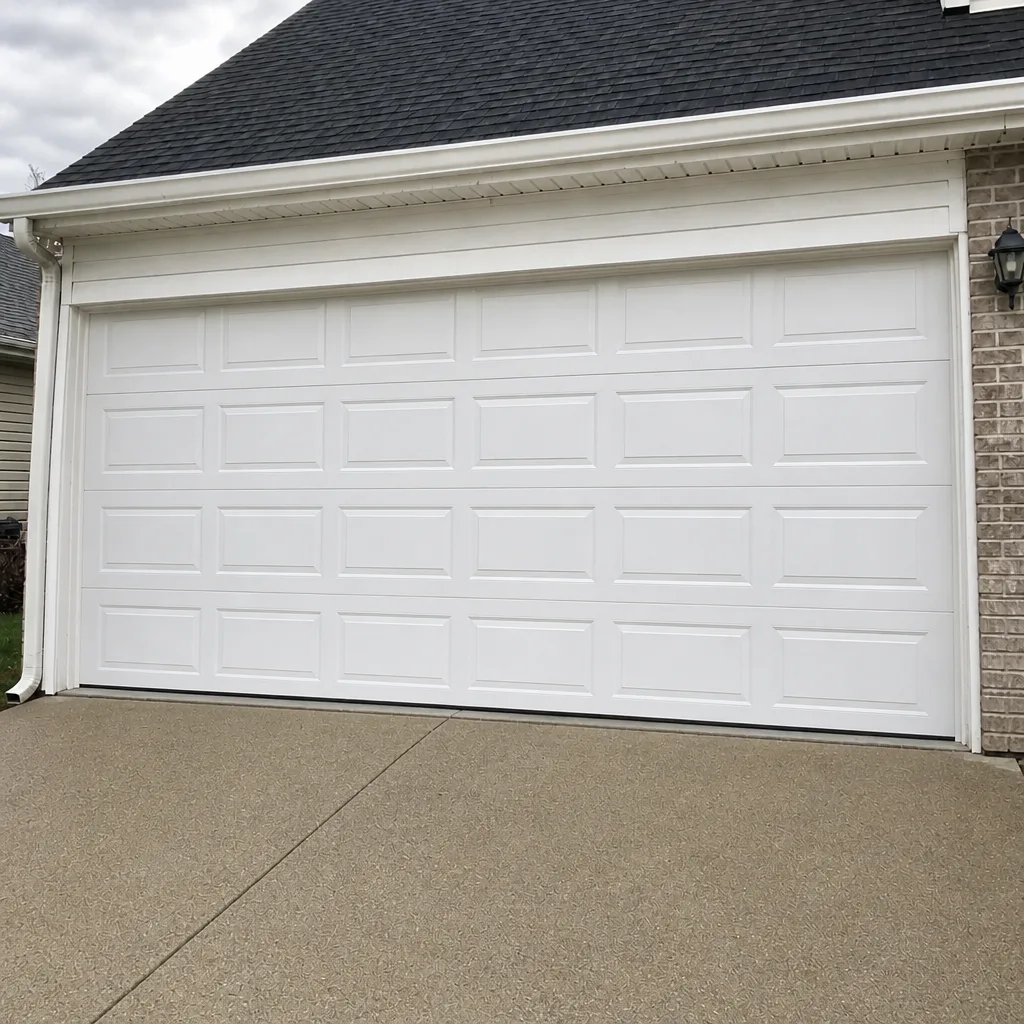 After
When to Call a Professional
Call a specialist when the door puts your safety or security at risk, when the mechanical parts are past their life, or when you can’t tell whether the problem is cosmetic or mechanical. That includes any snapped spring or cable, a door off its track, a door that won’t stay open, an opener that strains or reverses erratically, and any situation where the house is left unsecured because the door won’t close. It also includes the bigger decisions: choosing an insulated replacement, matching an HOA-approved style, and getting an honest repair-versus-replace answer on an older door. Fishers Garage Door Repair Pros offers free estimates in Fishers; call (855) 651-5310 and we’ll get the door looked at, quoted, and agreed before any work starts. We work on the brand already in your garage, and garage doors only.
Frequently Asked Questions
Clopay and Amarr steel doors are the ones we see most on Fishers homes built between 2000 and 2020, usually paired with a LiftMaster or Chamberlain opener. Genie units turn up in some earlier builds and in homes where the opener was later replaced. Knowing which you have helps a technician arrive ready rather than guessing. Call (855) 651-5310 and tell us the brand and we’ll give you a free estimate on the repair.
It depends on the part: a single spring replacement and a new bottom seal are very different jobs, so we quote each separately. The written estimate sets the final price, and you agree to it before any work starts. When you call with the brand and the symptom, we can give you a realistic range and then confirm on site. Call (855) 651-5310 for a free estimate.
No. We quote the job before we start, and the written estimate is the price, so there’s no invoice larger than what you agreed to. If a hidden problem turns up once the door is opened up, we stop and talk it through before any extra work. Call (855) 651-5310 to get your estimate.
For repair and emergency calls, we treat a broken door as urgent and aim to get to it quickly, often the same day. Installation and full replacement are different because the door has to be measured and ordered, so that’s scheduled rather than same-day. Either way, call (855) 651-5310 and we’ll tell you the honest timeline.
We connect you with vetted local professionals who are licensed and insured as their state requires, and our technicians have up to 9 years of experience on high-tension springs and opener systems. Spring work is safety-critical, so we don’t send out anyone untrained for it. Call (855) 651-5310 with any questions before you book.
Many do, and the three items most commonly restricted are color, material, and window placement. Before you buy a replacement, ask your HOA’s architectural review committee for the approved palette and styles. Once you have that, call (855) 651-5310 and we’ll work the measure and quote around what your community allows.
The Bottom Line
Most of what goes wrong with a Fishers garage door is predictable because the door and opener on the house came from a short list of builder-grade suppliers. Check the springs and seals each fall, replace worn bottom seals and weatherstripping before the freeze sets in, read your door’s rating label before you shop for insulation, and check the HOA rules before you pick a color. Match the fix to the problem: cosmetic work for a sound door, mechanical work for an unsafe one. When it’s a spring, a cable, or a door that won’t close, call a specialist rather than risk it. Garage doors only, one call from repair to replacement.
Written by the team at Fishers Garage Door Repair Pros.